How to Make a TikTok Media Kit (With a Rate Card Example)
Sooner or later a brand will send you a message that says “Can you share your media kit?” If you do not have one ready, you will either scramble to make something at midnight or quietly lose the deal to a creator who did. A good media kit takes an afternoon to build and can pay for itself with the very first partnership.
This guide walks you through what to include, which numbers brands actually care about, how to put together a simple rate card, and the mistakes that make brands move on.
What Is a TikTok Media Kit?
A media kit is a short document, usually one or two pages, that introduces you to brands. It shows who you are, who watches you, how well your content performs and what you charge. Think of it as a CV for your TikTok account.
Brands see dozens of creators every week. A clear media kit saves them time, and saving a brand manager time is one of the easiest ways to stand out.
What Brands Look for First
Most brands are not impressed by follower count alone anymore. They want to know three things:
- Is this creator’s audience the audience we want to reach? Age, gender and location matter more than raw size.
- Do people actually watch and interact? Average views and engagement rate tell them this.
- Will this creator be easy to work with? Clear pricing, professional examples and a quick way to get in touch.
Build your media kit around those three questions and you are already ahead of most creators.
What to Include in Your Media Kit
1. A short introduction
Two or three sentences about who you are and what your content is about. Add a clear photo of yourself and your TikTok handle. Keep it friendly and specific. “I share budget home cooking for students” is far better than “I’m a passionate content creator.”
2. Audience demographics
Pull these from TikTok Studio analytics: the age range of your viewers, the gender split and your top countries or cities. If a brand only ships to the UK and 70% of your audience is in the UK, that single fact can close the deal.
3. Core performance stats
Include your follower count, but put the most weight on:
- Average views per video over the last 30 days
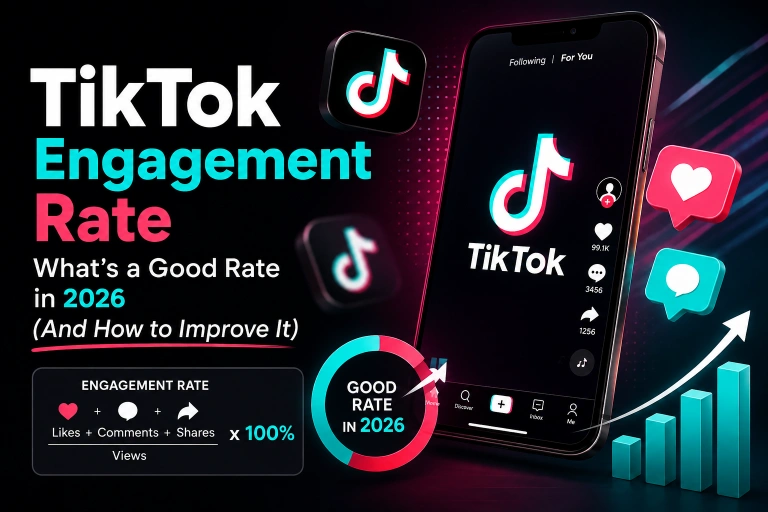
- Engagement rate (likes, comments and shares divided by views)
- Total views over the last 30 or 60 days
You can work out your engagement rate in seconds with our Engagement Rate Calculator. If you are not sure whether your number is good, our guide to TikTok engagement rates shows typical benchmarks by account size.
4. Your best content
Link two to four videos that show what a brand would get from you. If you have done paid work before, include at least one sponsored video. Screenshots of results, such as views, link clicks or a discount code’s sales, are even stronger.
5. Past partnerships
List brands you have worked with, even small local ones. If you have a short quote from a happy brand contact, add it. If you have none yet, leave this section out rather than filling it with guesswork.
6. Services and rate card
Spell out what you offer and what it costs. We cover this in the next section.
7. Contact details
A business email at the bottom of every page. It sounds obvious, yet plenty of media kits forget it.
How to Build a Simple Rate Card
Your rate card lists the packages you offer and a starting price for each. Common options include:
- One dedicated TikTok video about the product
- A product mention inside a regular video
- A bundle of two or three videos over a month
- A LIVE stream featuring the product
- Usage rights, which let the brand run your video as an ad
- Exclusivity, meaning you will not work with competitors for a set time
To find a fair starting price, look at your average views and engagement, not just followers. Our guide to TikTok brand deal pricing explains how creators at different sizes price sponsored posts, and our TikTok Money Calculator gives you an estimate based on your own numbers.
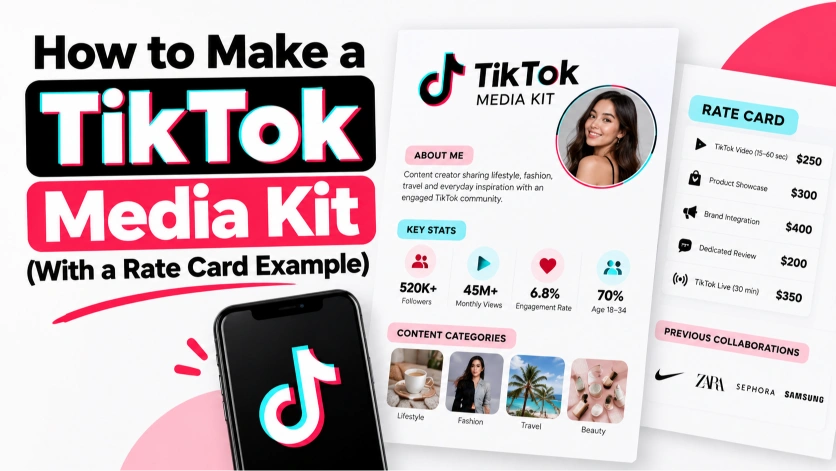
An illustrative rate card
Here is how a rate card might look for a creator with 50,000 followers, around 30,000 average views and a 6% engagement rate. These figures are an example of the layout, not a benchmark for your account.
| Package | Starting price |
|---|---|
| 1 dedicated video (60 to 90 seconds) | $450 |
| Product mention in a regular video | $250 |
| 3 video bundle over 30 days | $1,150 |
| 30 minute LIVE feature | $300 |
| Usage rights for paid ads (30 days) | +30% of video fee |
| Category exclusivity (30 days) | +20% of video fee |
Writing “starting from” next to your prices keeps room to negotiate, and a small discount on bundles encourages brands to book more than one video.
Design Tips That Actually Matter
- Keep it short. One or two pages is plenty. Brands skim.
- Match your content style. Use colours and fonts that feel like your videos so the kit looks like you.
- Save it as a PDF. It looks the same on every device and is easy to attach.
- Use a free design tool. Canva and similar tools have media kit templates you can adapt in under an hour.
- Put a date on it. A line such as “Stats updated September 2026” shows brands your numbers are current.
Mistakes That Cost Creators Deals
- Old numbers. Update your stats at least once a month. A brand that checks your profile and sees different figures will lose trust fast.
- Rounding up. If you average 18,000 views, do not write 25,000. Brands can see your videos.
- Bought followers or views. Brands and agencies use tools that flag fake audiences. Once caught, you rarely get a second chance.
- No prices at all. “DM for rates” adds an extra step. A starting price helps the brand decide quickly.
- Too much text. Use headings, short lines and numbers people can scan.
How to Send Your Media Kit
When a brand asks, reply the same day with a short, friendly message, your PDF attached and one line suggesting a package that suits their product. If you are pitching a brand first, lead with why their product fits your audience, then attach the kit. Keep the email under 150 words.
If you also sell through TikTok Shop, mention it. Brands like creators who can drive sales directly. Our guide to TikTok Shop commissions explains how that income works.
Frequently Asked Questions
Do I need a media kit if I only have a few thousand followers?
Yes. Small brands and local businesses work with small creators all the time, and a media kit makes you look ready for business. A strong engagement rate on a small account is a real selling point.
How often should I update my media kit?
Once a month is a good habit, and always before you send it to a big brand.
Should I share my exact follower count or round it?
Round it sensibly, for example 48,200 to 48K, but never round up to a number you have not reached.
The Bottom Line
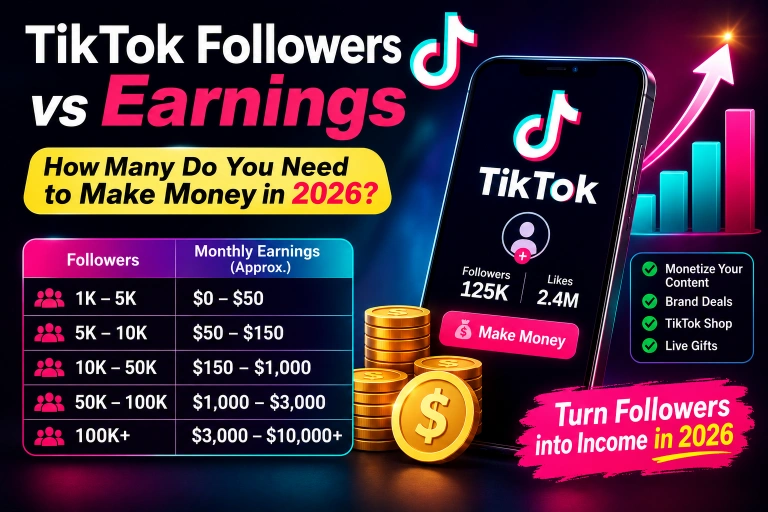
A TikTok media kit tells brands who you are, who watches you and what you charge, in a format they can read in two minutes. Lead with audience and engagement, keep your prices clear, and update it often. To see how follower count and income relate at different sizes, read our guide on TikTok followers vs earnings, and when you are ready to reach out, follow our guide on how to get brand deals on TikTok.